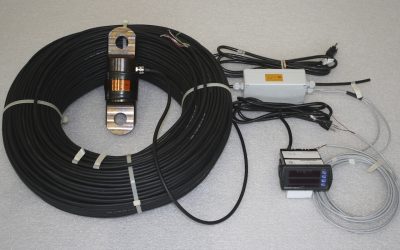
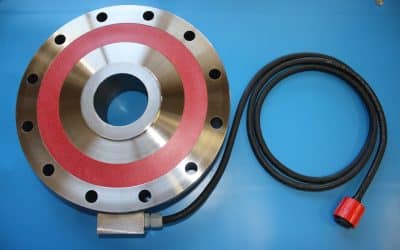
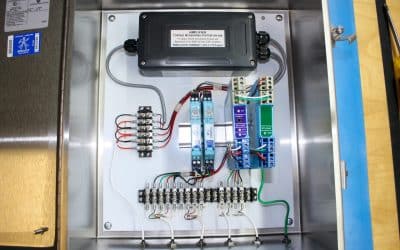
Strain gaging technology is the foundation of modern load cell and force measurement systems. By converting mechanical deformation into an electrical signal, strain gauges allow engineers and technicians to measure force with exceptional accuracy. From industrial automation to aerospace testing, this technology plays a critical role in ensuring reliable data and safe operation across a wide range of applications.
How Strain Gauges Work
A strain gauge is a sensor that measures the deformation of a material when force is applied. Typically made from a thin metallic foil arranged in a grid pattern, the gauge is bonded to a carefully engineered sensing element. When the material experiences tension or compression, the strain gauge deforms along with it, causing a small but measurable change in electrical resistance.
This change in resistance is extremely subtle, so strain gauges are commonly configured in a Wheatstone bridge circuit. This arrangement amplifies the signal and allows for precise measurement of even the smallest changes in force. In load cells, multiple strain gauges are often used together to improve sensitivity, temperature compensation, and overall accuracy.
Why Strain Gauging Is Used in Load Cells
Strain gaging is widely used in load cells because of its precision, reliability, and adaptability. It allows for accurate measurement across a broad range of force capacities, from very small loads in laboratory settings to extremely large forces in industrial environments.
Key advantages of strain gaging in load cell design include:
- High sensitivity to small changes in force
- Excellent linearity across the measurement range
- Repeatable and consistent output over time
- Compatibility with a wide range of materials and geometries
- Ability to operate in both static and dynamic measurement environments
These characteristics make strain gaging the preferred technology for force measurement systems where accuracy and dependability are critical.
Factors That Affect Strain Gauge Performance
While strain gauges are highly precise, their performance can be influenced by several factors in real-world applications. Understanding these variables is essential for maintaining measurement accuracy.
- Temperature Variations: Expansion and contraction of materials can affect resistance readings and introduce measurement drift
- Moisture and Contamination: Exposure to humidity or chemicals can degrade adhesives and impact signal integrity
- Mechanical Fatigue: Repeated loading cycles can alter material properties over time
- Improper Installation: Misalignment or poor bonding can lead to inaccurate readings
- Electrical Noise: Interference from surrounding equipment can disrupt signal output
To address these challenges, many organizations rely on professional calibration and testing services. A NIST-traceable calibration laboratory ensures that measurements are verified against recognized national standards, helping maintain accuracy and consistency over time.
Traceability to organizations such as the National Institute of Standards and Technology (NIST) provides confidence that measurement data is aligned with established benchmarks and can be trusted across applications.
Practical Tips for Improving Accuracy
Service providers and calibration experts emphasize several best practices to optimize strain gauge performance and extend the life of load cells:
- Ensure proper surface preparation before installing strain gauges to promote strong adhesion
- Use appropriate adhesives and protective coatings based on environmental conditions
- Implement shielding and grounding techniques to reduce electrical interference
- Regularly inspect sensors for signs of wear, damage, or environmental exposure
- Schedule routine calibration to detect and correct measurement drift
For applications involving rotational force, accurate measurement is equally important. Utilizing specialized torque sensor calibration services helps ensure that torque measurement systems maintain the same level of precision and traceability as load cells.
The Role of Calibration in Long-Term Performance
Even with proper installation and protection, strain gauges and load cells can experience performance changes over time. Regular calibration is essential to verify accuracy and maintain confidence in measurement data.
Calibration processes compare sensor output against known reference standards, evaluating characteristics such as linearity, repeatability, and hysteresis. When performed in a controlled environment with traceable standards, calibration ensures that measurement systems continue to meet performance requirements.
Conclusion
Strain gaging technology remains at the core of load cell force measurement, providing the precision and reliability required for modern engineering and industrial applications. By understanding how strain gauges work, recognizing the factors that influence their performance, and following best practices for installation and calibration, organizations can maintain accurate and dependable measurement systems.
When combined with professional services, traceability to recognized standards, and ongoing maintenance, strain gaging delivers consistent, high-quality data that supports safety, efficiency, and performance across a wide range of industries.