
Environmental Testing and Durability in Load Cell Production
Ensuring Load Cell Reliability Through Rigorous Environmental Testing and Validation
Load cells are designed to deliver precise force measurement in a wide range of demanding environments, from industrial manufacturing floors to aerospace testing facilities. However, accuracy alone is not enough—these sensors must also withstand harsh real-world conditions without performance degradation. Environmental testing is a critical part of load cell production, ensuring that each sensor maintains reliability, stability, and accuracy under stress.
Why Environmental Testing Is Critical
In real-world applications, load cells are rarely used in controlled laboratory environments. Instead, they are exposed to fluctuating temperatures, humidity, mechanical vibration, and other environmental factors that can affect performance. Without proper testing, these conditions can introduce measurement drift, signal instability, or even mechanical failure.
Environmental testing simulates these conditions during the manufacturing process, allowing engineers to evaluate how load cells respond to stress before they are deployed. This proactive approach helps identify weaknesses, improve design durability, and ensure long-term measurement accuracy. Many of these evaluations are paired with professional force sensor calibration services to confirm that performance remains within specification even after environmental exposure.
Temperature Testing and Thermal Stability
Temperature fluctuations can significantly impact load cell performance. Materials expand and contract with temperature changes, which can alter strain gage readings and affect output accuracy.
To address this, load cells undergo thermal testing that exposes them to both high and low temperature extremes. This process evaluates:
- Thermal expansion effects on the sensing element
- Stability of strain gage signals across temperature ranges
- Zero balance shifts caused by temperature changes
- Compensation effectiveness within the load cell design
Advanced strain gaging installations are often designed to operate across extreme temperature ranges, from cryogenic conditions to high-heat environments, ensuring performance stability even under severe conditions.
Moisture and Environmental Protection Testing
Moisture is another major factor that can impact load cell durability. Water ingress can damage strain gages, corrode internal components, and disrupt electrical signals.
To prevent these issues, load cells are subjected to environmental sealing and moisture resistance testing. This includes exposure to high humidity conditions, water spray, or submersion depending on the intended application. Protective measures such as hermetic sealing, coatings, and specialized enclosures are evaluated during this process.
In specialized applications, sensors may even be designed for underwater or submersible environments, requiring additional protective materials and installation techniques to ensure long-term survivability.
Vibration and Mechanical Stress Testing
Many load cells operate in environments where vibration and dynamic forces are constant, such as manufacturing equipment, transportation systems, or rotating machinery. These conditions can introduce noise into measurement signals or lead to mechanical fatigue over time.
Vibration testing simulates these real-world conditions by subjecting load cells to controlled mechanical oscillations. This testing evaluates:
- Structural integrity under repeated stress cycles
- Resistance to mechanical fatigue and wear
- Signal stability in dynamic environments
- Long-term durability under continuous operation
By identifying potential weaknesses early, manufacturers can refine designs to improve resilience and maintain measurement accuracy in high-vibration settings.
Calibration and Standards in Environmental Testing
Environmental testing is closely tied to calibration and quality assurance. After exposure to environmental stresses, load cells must be recalibrated to verify that their performance remains within specified tolerances. This is where a NIST-traceable calibration laboratory becomes essential, ensuring that measurements are linked to recognized national standards through an unbroken chain of comparisons.
Traceability to organizations like the National Institute of Standards and Technology (NIST) ensures that calibration results are consistent, repeatable, and aligned with internationally accepted measurement benchmarks. NIST calibration services establish the relationship between applied force and measured output, providing highly accurate reference data for force measurement systems.
Additionally, many calibration processes follow ISO/IEC 17025 standards, ensuring that testing laboratories maintain technical competence, controlled procedures, and documented quality systems. This combination of traceability and standardization is critical for maintaining confidence in measurement accuracy across industries.
Real-World Performance and Long-Term Reliability
The ultimate goal of environmental testing is to ensure that load cells perform reliably throughout their operational life. By simulating real-world conditions during production and validating performance through force sensor calibration services manufacturers can deliver sensors that maintain accuracy even in the most demanding environments.
Key benefits of environmental testing include:
- Improved measurement stability under changing conditions
- Reduced risk of sensor failure in harsh environments
- Extended lifespan of load cells and associated equipment
- Increased confidence in measurement data for critical applications
Conclusion
Environmental testing is a vital component of load cell production, bridging the gap between laboratory design and real-world application. By evaluating performance under temperature extremes, moisture exposure, vibration, and mechanical stress, manufacturers ensure that load cells remain accurate, durable, and reliable over time.
When combined with NIST-traceable calibration, ISO-compliant processes, and professional verification through specialized laboratories, load cells can deliver consistent, high-performance measurements that meet the rigorous demands of modern industry.
Industry Insights

INDUSTRIAL BOLTING
Background: A Bolted Joint is the most widely used method for fastening...
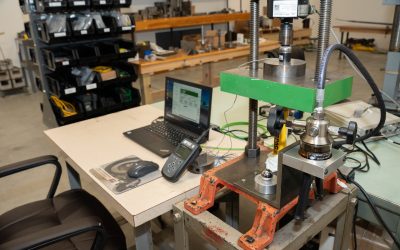
Ensuring Precision: The Significance of Metrological Traceability in Load Cell Calibration
Industry InsightsIn the world of measurement and calibration, precision...

Enhancing Corrosion Resistance in Load Cells and Sensors with Electropolishing and Citric Acid Passivation
Industry InsightsThe Role of U.S. Load Cell Manufacturers in Advanced...