
Why Custom Load Cell Manufacturing Matters in Specialized Applications
Why Custom Load Cell Manufacturing Matters in Specialized Applications
Force measurement systems are used in a wide range of industries, from aerospace engineering and industrial automation to medical device manufacturing and underwater testing equipment. While standard load cells are suitable for many applications, some environments and mechanical systems require far more specialized sensing solutions. In these situations, custom load cell manufacturing becomes essential for achieving reliable performance, precise integration, and long-term measurement accuracy.
Unlike standard off-the-shelf sensors, custom load cells are engineered specifically around the operational requirements of the application. These sensors can be designed to fit unique geometries, withstand harsh environments, or operate within systems where conventional load cells would be impractical or ineffective. Detailed examples of these capabilities can be found through custom load cell manufacturing solutions designed for highly specialized industrial and engineering applications.
Why Standard Load Cells Are Not Always Enough
Many industrial systems operate under conditions that place significant limitations on sensor size, mounting orientation, environmental protection, or performance requirements. In these cases, a generic load cell may not provide the flexibility or reliability needed for accurate measurement.
Custom manufacturing allows engineers to design sensing systems around the equipment itself rather than forcing the equipment to adapt to a standard sensor configuration. In some applications, manufacturers modify existing sensor designs to meet capacity or dimensional requirements. In more advanced systems, structural components are redesigned to function as sensing elements without altering the external geometry of the machine or assembly.
This approach is especially valuable in industries where space constraints, dynamic loading conditions, or environmental exposure make traditional sensor integration difficult.
Advantages of Custom Load Cell Manufacturing
Custom load cells offer several important advantages compared to standardized sensing systems. By tailoring the design to the specific application, manufacturers can improve both measurement performance and overall system integration.
Key benefits include:
- Improved mechanical integration within complex equipment
- Reduced installation complexity and assembly modifications
- Increased measurement precision for application-specific loads
- Better environmental durability in harsh operating conditions
- Faster response times for dynamic force measurement systems
- Enhanced long-term reliability under repeated loading cycles
Because the sensor is designed around the exact operational environment, custom load cells often achieve greater stability and repeatability than general-purpose alternatives.
Supporting Challenging Industrial Environments
Many specialized applications expose sensing systems to conditions that exceed the capabilities of conventional load cells. High vibration levels, thermal cycling, underwater operation, chemical exposure, and heavy shock loading can all affect measurement performance if sensors are not specifically engineered for those environments.
Custom load cell manufacturing allows engineers to select materials, protective coatings, sealing methods, and internal configurations that match the environmental demands of the application.
Examples of industries that commonly rely on custom load cells include:
- Aerospace and defense testing systems
- Marine and underwater equipment
- Industrial automation and robotics
- Medical and rehabilitation devices
- Energy production and heavy machinery
- Structural testing and research laboratories
In aerospace applications, for example, sensors may require lightweight materials and high fatigue resistance. Underwater systems often require corrosion-resistant materials and advanced sealing techniques to prevent moisture intrusion. Industrial automation systems may prioritize compact sensor geometry and rapid response times for dynamic loading conditions.
The Role of Precision Engineering in Custom Sensor Design
Developing a custom load cell involves far more than adjusting dimensions or changing mounting hardware. Engineers must carefully analyze how force travels through the structure and how the sensing element will deform under load. This process requires precise mechanical modeling, material selection, strain gauge placement, and environmental protection design.
Most load cells rely on strain gauging technology to convert mechanical deformation into electrical signals. Because strain gauges detect extremely small resistance changes, even minor design inconsistencies can affect long-term measurement stability. Proper engineering helps ensure that the sensor deforms predictably and produces repeatable output across its operating range.
Manufacturers often perform extensive testing throughout development to evaluate:
- Linearity across the full load range
- Repeatability under cyclic loading
- Sensitivity and output stability
- Thermal compensation performance
- Resistance to vibration and fatigue
These evaluations help ensure that the final sensor performs reliably under real-world operating conditions.
Custom Off-the-Shelf Manufacturing Approaches
In many cases, manufacturers combine existing sensing technologies with customized mechanical configurations to reduce development time while still meeting specialized requirements. This approach is often referred to as “Custom Off the Shelf” manufacturing.
As described through Sensing Systems’ custom load cell capabilities, this process allows manufacturers to adapt proven sensor technologies into application-specific designs without requiring entirely new sensing platforms. The result is a balance between customization, performance, and production efficiency.
This strategy can significantly reduce lead times while still delivering sensors capable of operating in highly specialized environments.
The Importance of Standards and Quality Assurance
Because custom load cells are frequently used in high-precision and safety-critical applications, quality assurance and calibration procedures are extremely important. Reliable manufacturing processes help ensure consistency, repeatability, and long-term performance across all operating conditions.
Many manufacturers follow internationally recognized calibration and testing frameworks such as the ISO/IEC 17025 laboratory standard, which establishes requirements for testing competence, calibration traceability, and measurement reliability. These standards help support confidence in force measurement systems used throughout industrial and research environments.
Routine testing and calibration also help verify that sensors continue to perform accurately after installation and throughout their operational lifespan.
Designing Sensors for Long-Term Reliability
Custom load cell manufacturing is ultimately about creating sensing systems that operate reliably within the exact conditions demanded by the application. Whether the goal is improving integration, increasing environmental durability, or achieving greater measurement precision, custom engineering provides the flexibility needed for specialized force measurement challenges.
By combining advanced strain gauging technology, precision engineering, and application-specific design, manufacturers can develop sensors that perform accurately even in environments where standard load cells would fail to deliver reliable results.
Industry Insights
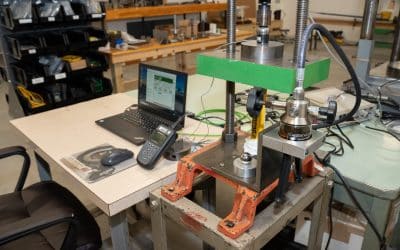
The Importance of Calibration in Long-Term Sensor Performance
Precision sensors such as load cells, torque sensors, and strain gauges...
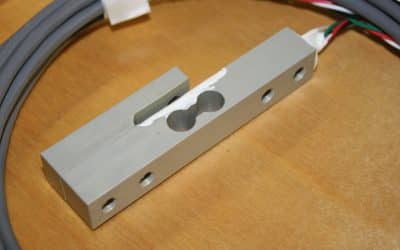
Load Cell vs. Pressure Transducer: Understanding the Difference
When it comes to measuring force, weight, or pressure, two of the most...
Why NIST Traceability Matters in Calibration Services
Industry InsightsEnsuring Precision, Compliance, and Confidence in Every...