
Why Routine Calibration Is Essential for Sensor Accuracy and Long-Term Reliability
In any industry that relies on precision measurement — from aerospace testing to industrial automation — sensor accuracy is non-negotiable. Load cells, torque sensors, pressure transducers, and strain-based devices all play critical roles in validating performance, ensuring safety, and maintaining quality control. But even the most advanced sensors don’t stay perfectly accurate forever.
That’s why routine calibration is essential for long-term reliability. Over time, sensors naturally experience drift, environmental stress, or mechanical wear that can affect measurement accuracy. Regular calibration ensures these devices continue performing at the level your application demands — and that your data remains trustworthy.
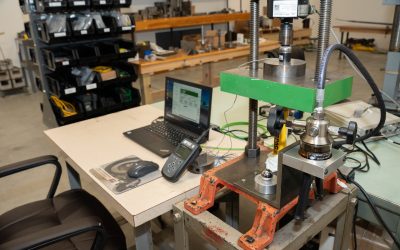
To maintain the highest degree of precision, many companies rely on NIST traceable calibration, a rigorous process that ensures every measurement can be traced back to the National Institute of Standards and Technology’s standards. Sensing Systems provides this service through its dedicated NIST Traceable Calibration Lab, helping customers across industries stay compliant, consistent, and confident in their measurements.
What Causes Sensors to Drift Over Time?
Even a perfectly manufactured sensor will experience changes throughout its lifecycle. Common contributors to drift include:
1. Mechanical Fatigue
Friction, vibration, cyclic loading, and extended use gradually affect internal components. For strain-based sensors, microscopic changes in the strain gauge material can alter the output over time.
2. Temperature & Environmental Stress
Exposure to moisture, temperature fluctuations, or corrosive environments causes expansion, contraction, and chemical interactions that shift readings.
3. Electrical System Instability
Wiring degradation, EMI/RFI interference, or power supply fluctuations can introduce noise or skew output signals.
4. Heavy or Unexpected Load Events
Overloads, impacts, or irregular load patterns — even if brief — can permanently alter a sensor’s characteristics.
Routine calibration corrects these changes and ensures performance remains aligned with engineering requirements.
The Value of NIST Traceability
NIST traceable calibration is considered the gold standard for measurement verification. It ensures:
-
Direct traceability to national measurement standards
-
Documentation required for audits, certifications, and compliance
-
Confidence that data is accurate, repeatable, and defensible
This level of verification is especially critical in industries where measurement errors can lead to safety risks, costly downtime, or failed compliance checks.
Sensing Systems’ NIST Traceable Calibration Lab provides full documentation, traceability chains, and certificates required for regulated environments.
How Often Should Sensors Be Calibrated?
Calibration frequency depends on several factors, including:
-
Application requirements
-
Load levels and cycling frequency
-
Environmental conditions
-
Industry regulations
-
The consequences of inaccurate data
Critical applications such as aerospace testing or heavy industrial environments may require calibration quarterly or even monthly, while less demanding use cases may only need annual verification.
Sensing Systems works with customers to define the optimal interval based on risk, performance needs, and operational demands.
Why Partner With Sensing Systems for Calibration?
Sensing Systems doesn’t just calibrate — we manufacture, design, and engineer sensors, giving us deep insight into how they behave under load, over time, and in real-world conditions.
Our calibration services offer:
-
NIST traceability for confidence and compliance
-
Comprehensive testing for load cells, torque sensors, and force-measurement devices
-
Rapid turnaround to reduce downtime
-
Insightful reporting to help monitor long-term performance trends
-
Support for both Sensing Systems products and third-party sensors
For organizations looking to maintain measurement accuracy and operational efficiency, routine calibration is a critical part of the process — and a trusted partner makes all the difference.
Protect Your Measurements. Protect Your Operations.
Measurement accuracy is the foundation of quality and safety in engineering. With a rigorous calibration schedule and a trusted, NIST-traceable partner, you can ensure your systems perform at their best — today and long into the future.
Industry Insights
ISO/IEC 17025 Calibration: What It Means and Why It Matters
Industry InsightsThe Role of U.S. Load Cell Manufacturers in Advanced...
Multi-Axis Load Cells: A Game Changer for Complex Measurements
Industry InsightsMulti-Axis Load Cells: A Game Changer for Complex...

The Five Most Common Uses of Submersible Load Cells
Industry InsightsThe Five Most Common Uses of Submersible Load Cells...