
The Fundamentals of Strain Gauging: How It Works in Force Measurement Systems
Understanding Strain Gauging Technology and Its Role in Accurate Force Measurement
Strain gauging is a core technology used in force measurement systems to convert mechanical deformation into an electrical signal. Whether in load cells, force sensors, or structural testing, strain gauges enable precise measurement of force, weight, pressure, and stress by detecting tiny changes in material deformation. In practical applications, professional strain gaging services ensure accurate installation and calibration for reliable measurement results.
What Is Strain and Why Is It Measured?
Strain refers to the deformation of a material when subjected to an external force. This deformation may be stretching (tension) or compression, and it is usually very small—measured in fractions of the original length. Strain gauges are designed to detect these minute changes and translate them into electrical signals that can be quantified.
Engineers measure strain to determine how materials behave under load, calculate stress, and evaluate structural integrity. This is especially important in industries where safety, performance, and precision are critical, such as aerospace, automotive testing, and industrial automation.
How Strain Gauges Work
A strain gauge is a sensor whose electrical resistance changes when it is stretched or compressed. The most common type consists of a thin metal foil arranged in a zig-zag pattern. When force is applied to the material bonded with the gauge, the gauge deforms, and its resistance changes proportionally. This change is extremely small, so strain gauges are typically used within a Wheatstone bridge circuit to convert resistance variations into a measurable voltage change.
In force measurement systems like load cells, multiple strain gauges are often arranged together to improve sensitivity and accuracy. As the sensing element deforms under load, the collective resistance changes in the bridge circuit produce a voltage output that correlates directly to the applied force.
Practical Applications of Strain Gauging
Strain gauges are foundational in many types of force and load measurement systems:
- Load Cells: Strain gauges bonded to a load-bearing element detect deformation under load, forming the core of industrial weighing and force measurement devices.
- Force Sensors: In handheld or laboratory instruments, strain gauges provide real-time force data for quality control and material testing.
- Structural Monitoring: Strain gauges can be applied to bridges, beams, and other structures to monitor stress and detect potential failure points over time.
Professional strain gaging services ensure that gauges are properly selected, installed, and protected from environmental factors, which is essential for accurate measurement results in these applications.
Installation and Calibration Considerations
Proper strain gauge installation is crucial for accurate performance. Surface preparation, correct adhesive bonding, precise alignment, and environmental protection are all part of the process. Specialized strain gaging services handle these technical requirements to ensure reliable results in demanding conditions.
Calibration is also critical. Measuring systems must be calibrated against known standards to verify accuracy and traceability. Standards like ISO/IEC 17025 define the requirements for testing and calibration laboratories, ensuring that measurements are consistent and traceable to recognized benchmarks.
Why Strain Gauging Matters
Strain gauging remains one of the most reliable and widely used methods for measuring force and deformation due to its sensitivity, versatility, and adaptability to different materials and structures. Whether in custom sensor design, industrial testing, or precision instrumentation, understanding the fundamentals of strain gauging helps engineers and technicians make informed decisions about measurement solutions.
By leveraging professional strain gaging services and adhering to international calibration standards, organizations can achieve accurate, repeatable, and trustworthy force measurement results across applications.
Industry Insights
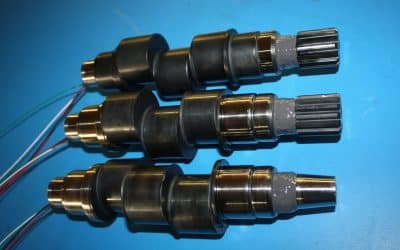
The Role of Strain Gaging in Load Cell Manufacturing
The Technology Behind Accurate and Reliable Force Measurement Systems...

From Drift to Certainty: How Torque Sensor Calibration Prevents Measurement Errors
Maintaining Accuracy and Reliability in Force Measurement Systems Load...

Why Routine Load Cell Calibration Is Critical for Long-Term Measurement Accuracy
Maintaining Precision, Traceability, and Confidence in Every Measurement...